In September 2009, writer and cultural critic Jamilah Lemieux wrote an open letter to Tyler Perry. In that letter, Lemieux talked about how she appreciated Perry’s dedication to giving jobs to Black people and how his work often features empowering messages about love and self-worth threaded with humor. But still, Lemieux said, she felt conflicted about Perry’s work:
The images of black people we see in your movies and two TV shows, Meet The Browns and House Of Payne, are not always fair…both your shows are marked by old stereotypes of buffoonish, emasculated black men and crass, sassy black women. I’d like to support your work, I really would — because I’d like to see people who look like me on TV. But I can’t let advertisers and networks think that these stereotypes are acceptable.
These depictions, wrote Lemieux, have been challenged by Black and white critics alike, and they were damaging enough that they should be reconsidered. She ended with a call for Perry to shift his narratives: “I beg of you, stop dismissing the critics as haters and realize that black people need new stories and new storytellers.”
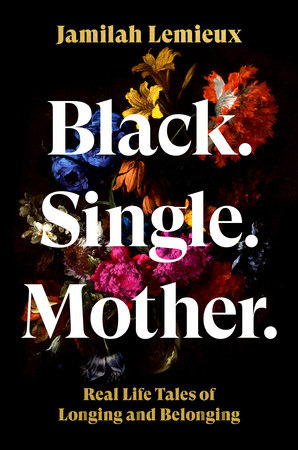
Since 2009, Lemieux has become one of those new storytellers. In addition to publishing an engaging (and now defunct) blog called The Beautiful Struggler, Lemieux has served as an editor for Ebony, written for publications such as Essence, The Guardian, The Washington Post, and Slate, and served as an advisor for political campaigns including Cynthia Nixon’s and Elizabeth Warren’s. Now, Lemieux has also written her first book, Black. Single. Mother.: Real Life Tales of Longing and Belonging, which challenges the stereotypes about single black motherhood in America.
Black. Single. Mother. interweaves anecdotes about Lemieux’s parents, her childhood, and her own parenting and co-parenting journey with trenchant and rigorous cultural analysis of topics ranging from the infamous Moynihan Report, to Kimberlé Crenshaw’s intersectionality, to the history of violence against Black women, to the ethics and challenges of being a high-profile single mother on social media.
In the last third of the book, Lemieux invites other Black single mothers to share their motherhood experiences. Doing this allows these women to tell their stories in their own voices instead of having those stories refracted through a cultural lens that often treats Black single mothers as a punch line, a source of derision, or worse.
Black. Single. Mother. is a bracing, vulnerable, deeply moving read, a book that manages to master both the first-person confessional and temper it with elements of ethnography, creating a book that is both a memoir and a dynamic map of a community of Black women who are often maligned, misunderstood, and profoundly underestimated. I’m looking forward to discussing it with you throughout the month of April. We will be in conversation with Jamilah on April 29 at 5 p.m. PT/8 p.m. ET. You can register here.
Have you started Black. Single. Mother? What are your early impressions? If you’re a single parent, from any background, what do you most wish people knew about your experience?
.


Well now I know what my next book is! I am a Black single mother. I started a substack and have a Patreon. That’s where I have been talking about my journey for the last several years… (Patreon for a decade). I couldn’t agree more regarding the depictions Tyler Perry portrays. It was something I commented on often as a theatre student in college and aspiring writer-producer. For now, I’m looking forward to this book until I have more to share. As a Black woman who grew up in a dual income household, there’s so much that goes on in my mind as I raise my kids in a single income household. I also live in a very expensive area and consistently try to make the money I have stretch while working multiple jobs with my graduate degrees in tow! 🤦🏽♀️
I finished loved it. I am not a single Black mother, but as the child of one it was nice to hear from their experiences. Jamilah Lemieux is such an important voice and I love that she shared her platform with other mothers. I particularly appreciated her including the perspective of mothers who admitted to making mistakes. We need more room for that.