
It Was A Knife
Emerging Writer Series

Every two weeks or so I am publishing an essay from an emerging writer. This week, we are publishing, “It Was A Knife” by Song Vang. Song is a neurodivergent Hmong woman residing in the Twin Cities of Minnesota. She holds two full-time roles as a mental health therapist and a mom, an absolutely passionate mom who believes all children should be represented in children’s literature. Currently, she has a complete manuscript for a children’s picture book about the Hmong American experience. She is also piecing together a memoir. She spends her free time discovering magical places such as waterfalls. She hopes to encourage conversations about culture and difference with a focus upon learning from one another through stories.
It was a knife, a long-rusted metal sharpened down to the neck, tucked in a handle made by the horns of the fiercest buffalo.
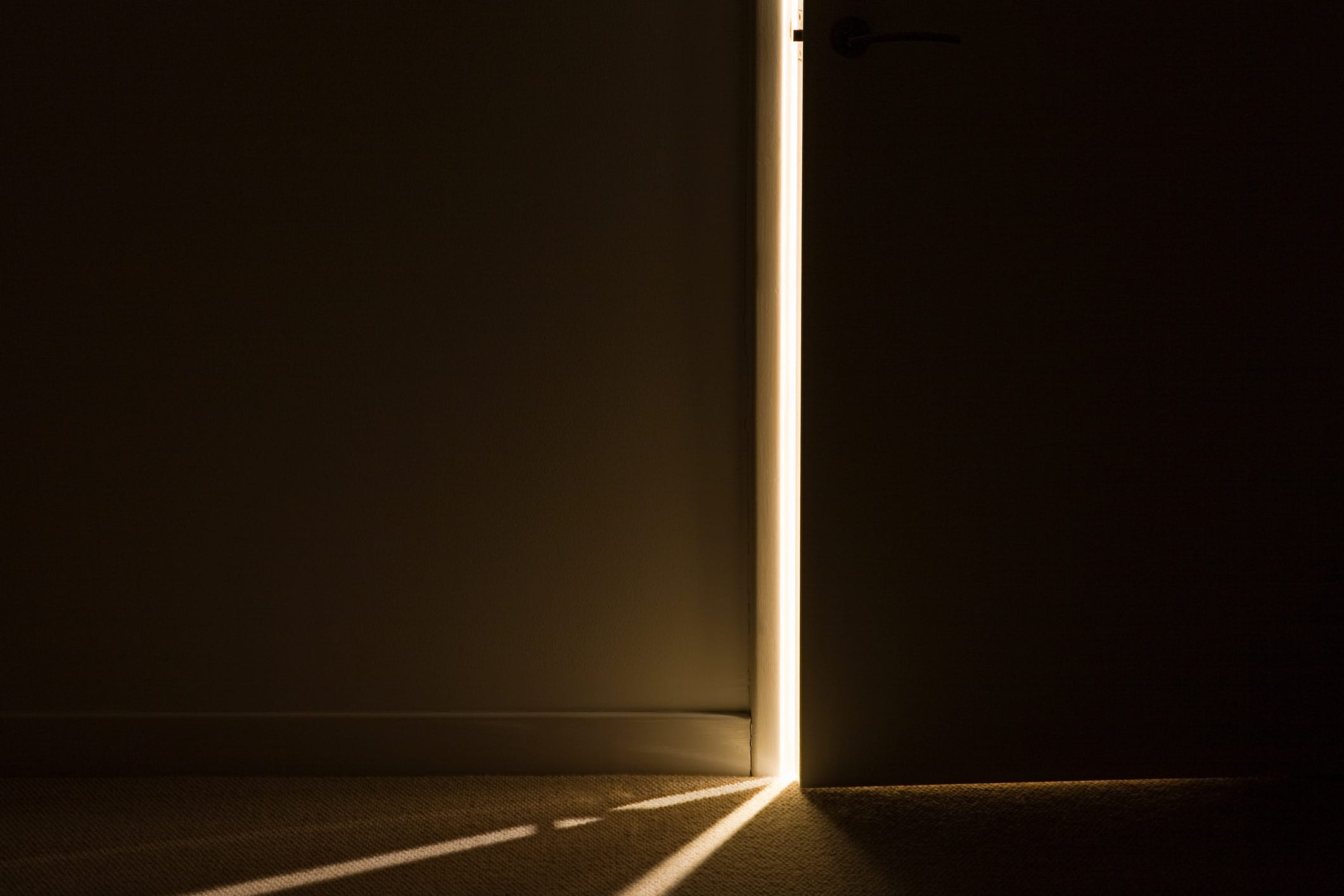
The morning was slow and quiet of words. My little body drifted back and forth in consciousness. With seven siblings and one bathroom, I heard water running and teeth brushing. The microwave beeped, then beeped again, then clinking and clacking sounds coming from the glass tray. Still no words. All the lights turned on beyond my dark room. A light beamed through an open gap of the door, left by two unmindful siblings, whom I shared a room with. In the bottom of the bunk bed facing the door, this was the light I saw most mornings. A light as bright as those close to dying would see. The light at the end of the tunnel. A light where the heavens welcome you from your darkness. But I saw it every morning and I heard it most nights. They came to me in whispers, and as helpless as they were, I could only direct them to the end of the tunnel.
Sometimes the dead visit me. They rarely shine because the dead are remnants of shadows made from the past. At least that’s what I think they are: people who used to have a life and no longer do. They chatter through the night in an empty hallway. I’ve always lived in limbo between what’s alive and the wandering dead, and some days the dead felt more familiar. On those days, I am unsure if the bright light was meant for me or them.
I fell back asleep after all the noisy siblings left for school. As a kindergartner, I got to sleep in until the sun rose, touching all that it could. It was a big year for me. I used to run around the block in the neighborhoods of Frogtown to get on the yellow school bus. My Mom would come chasing after me, while my siblings with their sharpened eyebrows poke at my face, yelling for me to get off the bus. In my mind, it was the only way I got to meet friends as big as me.
Mom worked two full-time jobs and when she was home, she had other duties. Knowing little to no English, she could only work jobs which only required an able body. It wasn’t until many years later that Mom’s disability would make her an undesirable body in the workforce. No law could protect her from the cruelty in this individualistic culture that isolates her from community.
Some nights, I sat on the stairs while my head bobbled, tirelessly waiting for mom. When I heard keys clanking and spotted a shadow that only belonged to mom, I was elated. Mom was warm like her boiled chicken, stewed in freshly picked herbs. Only her rice tasted sweet.
Dad was an educated man. He was a principal and ran a school back in the refugee camp in Thailand. Dad knew that having knowledge is how you feed the bellies of home and protect lives. He had to learn the rules of the world at a young age. Dad was coerced to partake in the Vietnam War at 15 years old. He was recruited by the CIA. A farmer boy turned soldier, a Hmong militia funded by the U.S., fighting a secret war not for honor, but for his people’s existence. A war brought by communism from the East and colonialism from the West. The world would be in uproar if they found out the U.S. had Hmong children dying in the name of their flag. In this war, like many others, either you held a gun or a gun was held at you.
It was a knife, this tool, this weapon, passed down by generations of cooks, builders, and almost murderers.
In 1973, the US pulled out of Vietnam, leaving tribal communities like Hmong, subjected to mass genocide. Vietcong and Pathet-Lao communists joined arms to roam the vast mountains of Laos, murdering human beings while they pillaged from bodies and homes. Some were rounded up and sent to concentration camps, never to be seen again. Mom once shared how her childhood was spent running through the lush but cluttered jungles of Laos when they were alerted by the screams, “the Vietnamese are here!” Mom had no time to see the faces of the deceased before trampling on their bodies, running wildly. Mom even got separated from Grandma once when their village was set aflame. Soldiers shot at them from all directions. Mom remembered seeing bullets piercing trees and bellies as she ran away from all the popping sounds. Grandma spent many uncertain nights in search of her missing children. She found Mom at a nearby village about a day later and my uncles, ranging from four to fifteen years old, on the 15th day, all well and alive. Separation was often the case for many families, but most were not as lucky as Mom.
Dad lived through his own terror. He was shot in the leg while on the run and spent restless nights crawling and hiding in the bushes. His body startled from any rattle or rumble. A few villagers found him and cared for his wound. To this day, a fragment of the ricochet remains in his leg right below the large dented scar it left behind.
Being hunted down meant they had to abandon the home that sheltered their personal belongings, memories, and laughter. When possible, they held tightly onto anything valuable, knowing it could be useful to trade for a life in the face of a soldier. They found salvation across the Mekong river at the open borders of Thailand. Many made bamboo floats while they swam through bodies and water. Some died from drowning before they made it there, or worse: they faced the Hmong superstitions of the dragon king himself who only comes to collect souls to expand his kingdom. Legend has it that when pulled into his grasp, only a shaman can negotiate for their soul back. He would swallow them whole and then leave their lifeless body on the shore to live for a few days before their soul completely dissipates from what was once human. Regardless of the danger, a runner must swim where green men can no longer march in front of them.
To this day, the dead are buried in unmarked graves. Their souls roam the jungles down to the river, unable to rest. Families ripped apart by the greed of hungry beings. And the ones who survived this horror live on to remember it.
With Dad working the second shift, he was home with us in the morning. I learned quickly how to fill an empty stomach when Mom was not around. When fresh rice was in the cooker, I scooped some into a bowl of water. Sometimes, I cracked eggs to scramble while catching my balance on the dining chair. This morning though, the rice cooker was empty, and Dad didn’t know that I could scramble eggs. I was going to make a cup of ramen. I remembered all the steps through observation: 1. open the lid, 2. pour the water, 3. put it in the microwave for 3 minutes, 4. let it beep, then beep again, then clinking and clacking to some warm noodles.
Our kitchen sat in the middle of the home, absent of natural lighting. It split the shadowy hallway that lead to bedrooms from our living room. The hallway, though dark and busy, had green garden wallpaper glued across the walls above the hickory wooden wainscot. The microwave sat on the corner of our dull yellow-stained countertops next to our stocky fridge. I always thought my house was boring because it was missing pinks, blues, and glitters, so I wore them instead.
I scrunched my hair into a ponytail and changed into the brightest colors. I walked over to the kitchen and took out a cup of ramen. I opened the lid, put the ramen in the microwave, and set the timer for three minutes. Before the first beep, black smoke started steaming out of the crevices from the microwave door.
I forgot to pour the water.
An alarm pulsated above me, a piercing sound. My belly was now numb, twisted and dried like ramen noodles. I opened the microwave door and frantically grabbed onto the bottom of the cup. I saw burnt ramen collecting black ashes to the rim of the melted foam cup. I hurried over to toss it in the garbage can.
I heard Dad’s footsteps coming down the tunneling hallway. Thump-ba-thump. Loud and racy.
My eyes shivered, unable to meet Dad’s. He dragged me by the elbow and into the living room. The room was bright, illuminating warm lights through the big windows. He held me by the back of my neck then threw me onto the floor where I landed, belly first.
Dad left back to the kitchen. I heard the weight of each step along with his screaming. This wasn’t over. He came back holding something the size of a machete, with the horns of a buffalo.
It was a knife. A Hmong knife, one that could chop through bones.
He grabbed my thick black hair and put the sharpest part of the knife to my tiny skull. He screamed, “do you want to die!” I hunched forward like a dog. My hair stuck in his grasp, and as his thunderous voice got louder, I was dragged back under the knife.
I was hungry.
Maybe I was close to the heavens. Sometimes I saw lights that others don’t. Mom said that maybe it was one of the relatives that was murdered during the Vietnam War that follows me. Maybe I would share the same fate, a violent death in the absence of empathy but empowered by rage.
But not today. I was left sniffling, curled up on the floor. I lay there in my pool of drool. The room and I remained static, hungry.
I brushed my hair back into a ponytail and blew all the snot out of my nose. I sat silently in the living room, focusing on the soft Arabian maroon rug with my backpack latched onto my back. Dad said he was sorry, and from the look on his face, troubled. I got on the yellow school bus and headed to school.
It was the last time I saw the knife that followed the shadow.
Hmong means “free people.” Maybe one day, we all can be Hmong, dead or alive.
 | A guest post by
|
This was extremely moving. I am left in tears. Thank you for sharing ✨
I must confess, the knife stayed with me long after the essay ended.
Not just the moment itself, but the sense that everything that arrived in that kitchen before the child did was present in it — war, displacement, hunger.
What deepened the piece for me is that the father isn’t turned into a simple villain. The history he carries stays present in the scene, and that makes the moment feel heavier and more human.
Looking forward to read more of you!