
Survivor Type
Emerging Writer Series

Every two weeks or so I am publishing an essay from an emerging writer. This week, we are publishing “Survivor Type” by Ala Fox. Ala is a Muslim American daughter of Chinese immigrants. She writes in English, Rust, memories, and Typescript. When not programming, she contemplates life and love @alalafox. Her work has appeared in The Southern Review, The Common, and others. She is passionate about racial equity and Oakland.
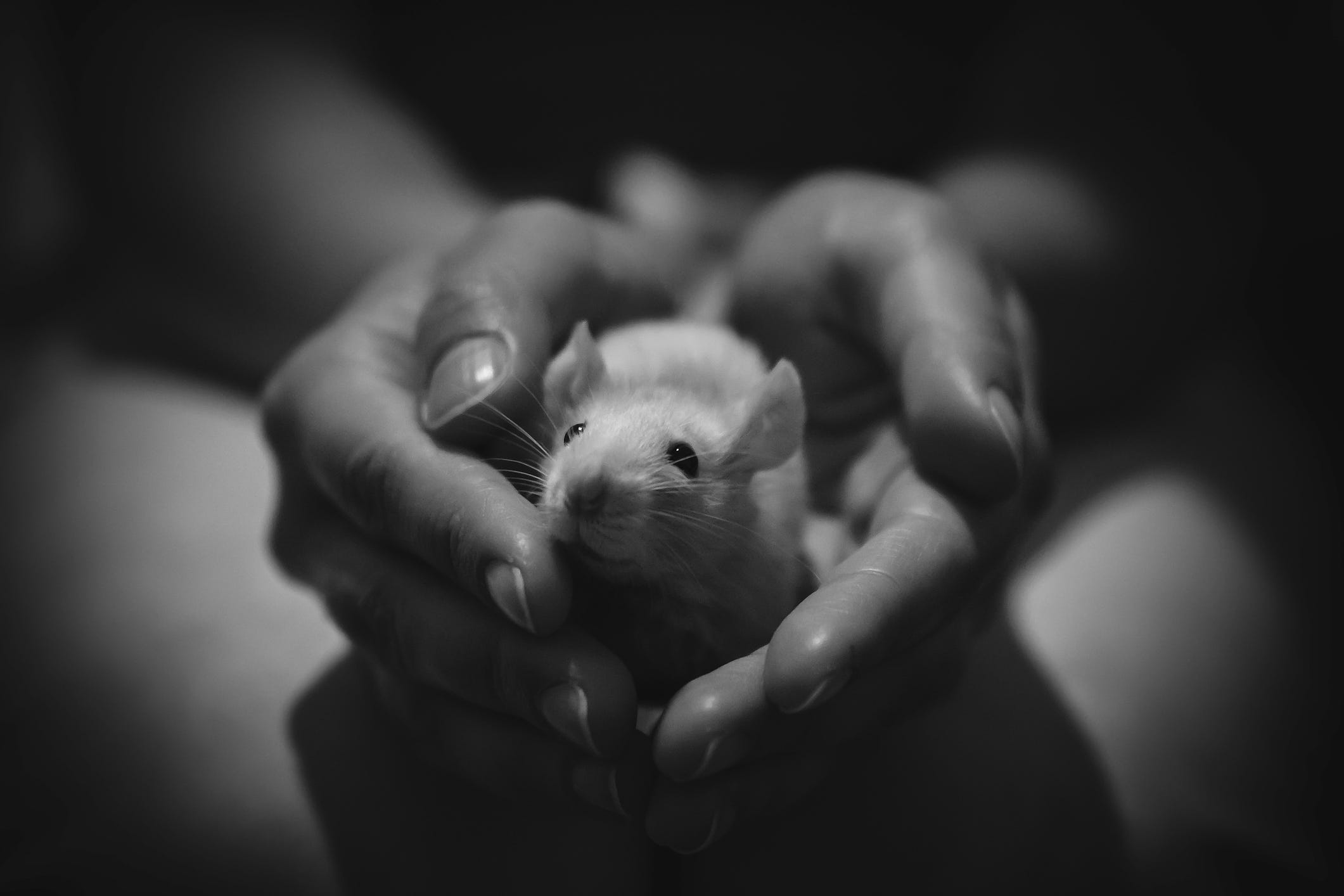
I got my first pet when I was 12, a hamster named Fuji. It was the year after Mom died. My sister Shira drove us to the pet store off the highway in Bloomington, a few blocks from our apartment. Dad had gone back to China, so it was just Shira and me at home. Shira was 16; it was her idea to get the hamsters. We each bought our own cages, bedding, and food—her with waitressing money and me with babysitting cash.
Dad was the reason we never had pets before, though he was barely home. He moved to China before I started school and visited only sporadically throughout the year. I think Mom would have liked having a pet, but Dad always said no.
To be fair, none of the other Asian families we knew had pets either, except one year when Theresa and Amy raised a string of guinea pigs that ended up cannibalizing one another. We heard horror stories of them breeding. It started with two, then there were ten. They bit and tore at each other until there were only two left—the same two to begin with? We weren’t sure—and our friends showed us the dismembered forelegs and mismatched ears collected from the cage.
I’d forgotten about the guinea pig episode by the time Shira and I got our hamsters. Though Mom was gone, Dad kept his same schedule—a month or two in the States, then China for three or four more. He stayed with us some weeks after Mom’s funeral before leaving again, and then it was just Shira and me. We were so excited about the hamster idea, we might have gone straight to the store after dropping Dad at the airport. There, Shira chose a tiny grey thing the size of a peach pit, and I picked a teddy bear hamster with white and brown fur. I named mine Fuji. He had two perfectly round ears and waddled the way corgis do, like they’ve been proportioned just to make you laugh.
That first year, Shira and I took our hamsters out often. We set them near the wall to see if they’d run to us on the other side of the room. We fed them baby carrots, and I worried at how the carrots stretched out the sides of Fuji’s cheek where he stored them all for later. I tried cutting them up but only made things worse, made many sharp points poking into his skin.
Life with Shira was like that. We tried at things that seemed normal but ended up wrong. We used to love grocery shopping with Mom, but for the two of us now every aisle became a battleground. Someone liked this, the other wanted that. Someone took too long, someone went too fast. Neither of us tried cooking, but Shira bought vegetables and ate them raw, which I found disgusting. Meanwhile I became an expert in frozen dinners, arguing with Shira over ones that were too expensive, then hiding food in the trash when they turned out to be inedible.
The first time we hit a hundred dollars at checkout, we turned to each other with eyes wide. We never knew food could cost so much. We almost abandoned our cart, but we were too embarrassed and counted out the money instead, which was nearly all we had. Afterward we assured each other it was okay, the food would last weeks. By the next time this happened, we weren’t so forgiving. Now our eyes narrowed with blame—someone grabbed something too expensive. Someone was being selfish. Someone was in the wrong, but we weren’t sure who.
Still, Shira and I banded together before Dad returned and prepared how to present the hamsters to him. We expected a fight, but when we finally showed Dad our new additions, he was too stunned to speak. I’d never seen that expression on him—shock, without anger. I was used to his anger, but it was fear I saw then. Back then, I thought he was afraid of the hamsters. Now I wonder if this was when Dad first realized what little authority he had over us in his absence. Even we hadn’t noticed that without him we made our own rules, made our own version of life. Maybe this realization was a relief to him.
There were moments, with Dad gone, when Shira and I reached for each other. We moved our beds into one room and our desks to the other, barely made it a week before moving everything back. We painted the walls a horrible orange but gave up halfway through completing the third.
Shira and I grew, but not together. I got my first period, and it took three of Shira’s tampons before I got it right. I considered telling her, but it seemed such a silly thing to bring up when we barely spoke. Mom used to fuss over Shira on her period, filling up the red rubber bottle to ease her cramps and bringing warm food to her room. If I told Shira, did I imagine she’d do these same things for me? No, of course not. Of course not, I told myself, and didn’t dare find out if I was right.
I started freshman year of high school where Shira was a senior. Often, Shira didn’t come home and didn’t tell me she’d be out. This made me angrier than anything. I stayed up all night listening for her, throwing a new fit for every hour of silence. I cursed Shira aloud and roamed the empty rooms of our apartment, as if taking up space could spite her.
Shira was supposed to drive us to and from school every day, but Shira hated driving me anywhere. If I was late getting ready, she’d leave. Once, we fought all the way down the elevator of our building. My sister didn’t bother to pop the trunk before getting in, just threw her bag on the passenger seat and slammed the door. I waited behind the car to put my backpack in the back like usual. Shira started the engine.
She hit my knees first—one smooth push that sent me backward but not hard enough to knock me over. At this, I planted my feet and threw my shoulder against the bumper, as though I could stop the mountain already in motion, the anger and resentment we aimed at each other because there was no one else around. Shira reversed easily, driving me back across the parking lot until she had enough room to pull forward. I jumped and swore as she sped off but quieted before she turned the corner. My cheeks burned. I didn’t dare look up at the many windows. I worried—did anyone see that? Did anyone see my sister leave me? I straightened and let out a laugh, in case they had. Like this was normal. Like everything was okay.
The thing is, I didn’t know if it was or wasn’t. Shira told me it wasn’t normal, the way I misbehaved, how I threatened her with scissors once because I was tired of her overpowering me, of being bigger and stronger than me. When Dad came home in the middle of that year, he lectured us and said this wasn’t how sisters behaved. He said sisters were supposed to take care of each other—so why was our house a mess, why was I suspended from school, why couldn’t Shira and do anything without fighting?
It wasn’t that Shira and I ratted each other out when Dad returned. We just couldn’t pretend things were different than they were, and the way things were was bad. Dad could see that. It was ugly, the home Shira and I made together. Even I knew that. Maybe that’s why Dad never stayed long. Even I wanted to leave—but where would I go?
Shira did leave. At the end of my freshman year of high school, my sister left for college on the east coast. She took her clothes and books, her bedsheets and the pictures from her wall. She took her hamster in his cage.
It was quiet afterward. A different quiet than Shira and I shared, where silence was its own form of aggression. This was an absence, a new kind of empty. It wasn’t bad, that first week alone. It was still summer then. I had friends over and we walked to Chipotle, shot water guns in the parking lot and stayed up late. The next week, Dad came back and stayed with me until school started. Then he was gone, and I was alone.
I was 14. It was just Fuji and me left in the apartment. The first thing I did was move Shira’s TV into my room. To make space I put Fuji’s cage in hers, next to the now-empty mattress on the floor. After that I kept both their doors closed, Shira’s and Dad’s. I wonder now why Dad didn’t move me someplace cheaper—we could’ve used the money, and I didn’t need all that space. Maybe it would have been too obvious then. In our three-bedroom, the empty rooms could be an accident.
I want to say we started off okay, Fuji and me. It’s not true. I was too young to get my license, but I’d take Dad’s car out because what else was there to do? The first time, I didn’t even make it out of the parking garage. I kept hitting the beam trying to reverse and scraped up all the paint on the left side. When I finally did make it onto the road, it was by adrenaline alone. I hadn’t done any lessons yet and sat with both hands tight at the top of the wheel, foot trembling so much it slipped off the gas pedal and shook every time I hit the brakes. I got pulled over once with a friend at McDonald’s. I was always paranoid about getting stuck somewhere with a dead battery, and the cop flagged us for having the lights off in the drive through lane. I almost peed my pants when I gave him Shira’s name and our address, and he let us go with a warning.
Life was different than with Shira. From the outside it probably looked worse, because I made it to school even less than before and was skinnier than ever. Inside, it didn’t feel better or worse. Shira and I had fought about everything—laundry, dishes. Now, I just didn’t think about those things. The laundry piled up, and plates molded in the sink. I used to hate when Shira left for school without me, but now I missed school all the time. English was my worst subject because of all the papers. Tests were easy, you just had to show up and it was done. But papers had deadlines and requirements I couldn’t handle. Everyday there was a chance I could do it, but then the day passed and there was still this looming Bad thing, Bad feeling, only now it was two weeks late instead of one.
It was the same with Fuji. So many deadlines piled up: I needed to change his bedding. I should take him out to play. I’d run into his room and dump food in the cage, then run back out before his head surfaced from its burrow. I didn’t want to see how I was failing him. Soon even this task grew insurmountable, after dragging my body through days of impossible tasks. Find food, miss homeroom. Miss physics. Fall asleep in calculus, fall asleep in history. Find food! Sit detention for missing homeroom, then wait two more hours for a ride home. Change clothes at home, if possible. Brush teeth, if possible. Take my mom’s shirt out of the plastic bag I kept it in and smell it as hard as possible, though the scent was long gone. Put the shirt back in the bag and tie it up tight, smell the box once more before closing the lid and cry, cry, cry.
At some point I stopped feeding Fuji altogether, though I adopted his habit of stockpiling food. Or maybe he learned from me originally, or maybe we both had in us some wrapped double helix that said: This is how you survive, and survival meant hiding and rationing and doing what was necessary. I pocketed boxes of raisins from the school cafeteria every time I passed through—I could get three, four, maybe five boxes a day. I ate them for dinner with peanut butter straight from the jar, using spoons until all the spoons were dirty, then knives, then the forks and finally chopsticks.
I told no one about my living situation, though it was known among my classmates. My friends joked my father was a spy, because I never revealed what work kept him away so often. In truth, I did not know. I understood he had some business in China, but couldn’t say what manner of work it was that shaped our lives this way.
*
It was winter when I remembered Fuji again. Dad was coming back soon, so I needed to pull things together best I could. It was night when I entered Shira’s room to clear the body—I was certain Fuji was dead. Nothing could survive so long in such neglect.
He was alive.
The poor creature had gnawed his way through the wood chip bedding after the food ran out. There was only a thin strip of soiled splinters left, padded together with half-eaten sunflower seed shells and Fuji’s own dried litter to form a makeshift burrow in a bottom corner of the cage. The upper bunk where Fuji used to sleep was abandoned. Probably he was no longer able to manage the short tunnel upward.
I saw Fuji for the first time in months when he lifted his head from the dirty nest. Somehow, he lived. There wasn’t enough bedding left to cover his body, and he and it were now the same shade of dirty grey. Even Fuji’s nose, once so pink, had lost its color. It swayed left and right as he twisted toward me, his eyes no longer glossy black beads but clouded and rough.
He had some kind of tumor. Two huge lumps protruded from either side of his body, and large patches of fur were missing. Fuji could barely walk, but he seemed happy to see me. I opened the cage door and reached my hand through the entrance as he sniffed his way forward, paws sticking along a thick coat of dried urine. He made slow progress but managed to crawl into the palm of my hand. Then he was still.
I stood quickly, Fuji in one hand while I put on shoes and grabbed keys with the other. The hamster was weightless despite the body so monstrously overgrown. I tried to keep still, afraid to disturb him, but he neither moved nor climbed up my arm like he used to. He lay nearly flat against my palm, as though desperate for as much contact as possible. I’d always wished for such stillness in our early days, when I imagined sitting together to watch TV with him in my lap. But Fuji was eager to explore then, and things didn’t turn out like I thought.
I took the elevator to the ground floor, exiting to the back parking lot where Shira once abandoned me. I crossed rows of empty cars, lit up by yellow floodlights overhead. Nothing else moved—no birds or insects or any other sign of life. Winter was here. At the end of the concrete was a grassy slope that leveled toward a small pond and copse of trees. I headed there, my breath breaking the air before me in little puffs of life. I’d forgotten a coat and Fuji began to shiver, enough to feel the tiny vibrations against my palm. We were beyond the lights now, but the night was cloudless, and I could still see my feet as I descended the shallow hill.
I set Fuji down near the water. Only then did I wonder where, if any, hamsters lived in the wild. Did they burrow underground like prairie dogs, or make homes in tree trunks like Disney cartoons? Fuji probably never touched grass in his life. He didn’t move a single step, but he didn’t try to climb back in my hand either. He only stood there, and I wished the grass were taller.
“I’m sorry,” I said aloud, and realized I was crying. I scooped Fuji up once more with both hands and held him close, softly petting the sparse fur despite my revulsion at his rotting skin. I was surprised to find the tumors hard beneath my fingers—how could Fuji still crawl, when parts of him had turned to stone? I pressed my lips to the back of his head and held them there, begging forgiveness.
I thought about changing my mind. Maybe there were tiny cancer wards for sick hamsters out there, somewhere I could take Fuji and make it all better. But this thought quickly exhausted me, so I set him back down instead. I wiped my tears. “I’m sorry,” I said again, and it was true. “I’m sorry, but I can’t take care of both of us. I love you, OK? I love you so much. I’m sorry.”
Standing, I could see the shape of Fuji’s body against the dark grass. Maybe an owl would find him, and it would all be over soon. Maybe he’d freeze overnight and drift off peacefully.
Did I turn around as I walked back to the apartment? I can’t remember. The next day, I threw out Fuji’s cage on my way to school and left the food and bedding next to the trash bins for whoever wanted them. I never went back to look for him and a few days later, it snowed.
*
I do remember this: the night I abandoned Fuji, I might have stayed longer with him, tried to comfort him in whatever way there was left, except at some point I worried an adult would see me crouched there and come investigate.
I don’t know why I always feared someone watching. I understand now no one was. Even Dad never mentioned the damage to the car when he returned, or the cigarettes I left in the console. He never asked what happened to Fuji.
I almost wish there had been someone looking out their window that night, or that day Shira hit me with her car. Someone I could return to now and show what I became. Someone to testify—yes, I did this thing, and then I straightened my shoulders before turning around. I did cry, but that was okay. I did walk myself back into the building.
Maybe Fuji survived. He had proven, after all, that he was a survivor. He didn’t starve when I starved him. He kept moving with two or more tumors weighing him down. Maybe he made a life out there by the pond, despite everything.
 | A guest post by
|
oh… the image of Fuji crawling into her palm after all that neglect, i had to pause there. the way she holds both the guilt and the tenderness without trying to clean it up feels so honest, especially that line about i can’t take care of both of us. curious how you chose this piece, what in it stayed with you the most? excited to connect!!
What a beautiful and heartbreaking piece - I wish there was more by Ala to read. Thank you for sharing this Roxane.